
Call us now :08071792071
 Send Inquiry
 Send Inquiry
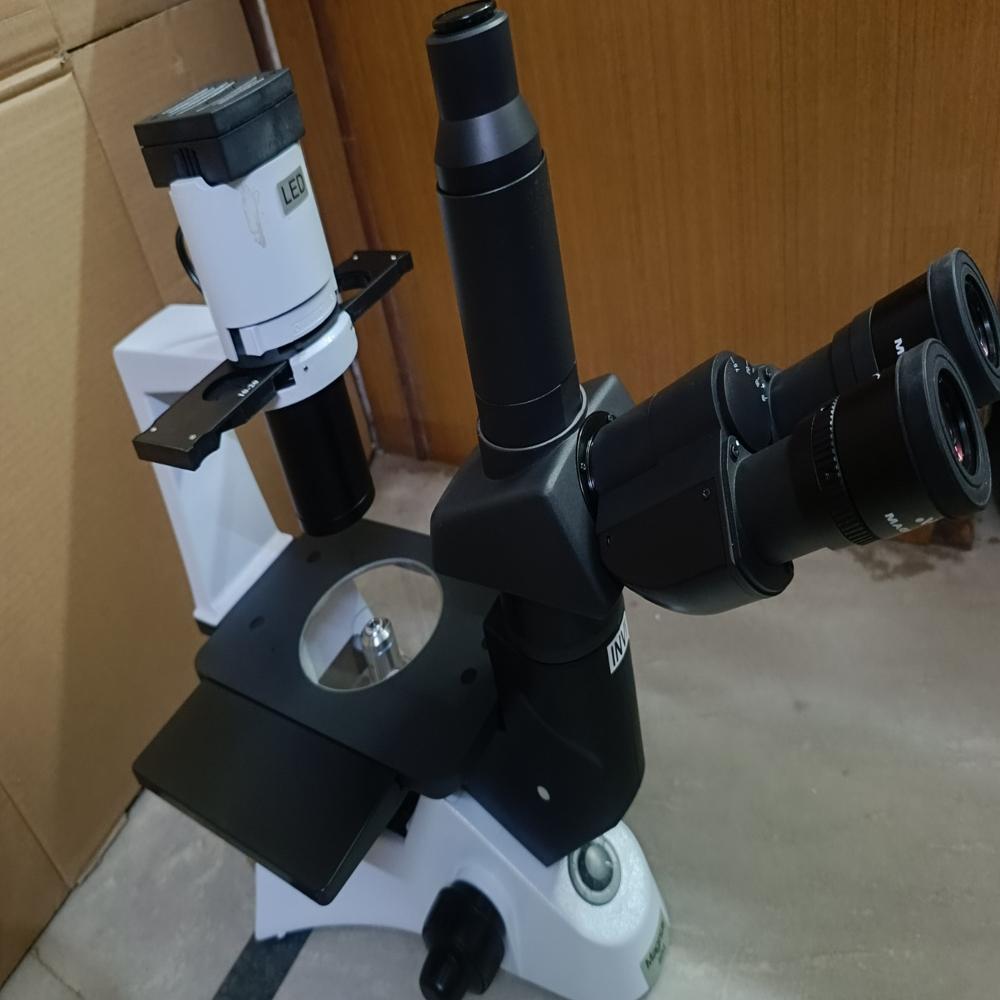
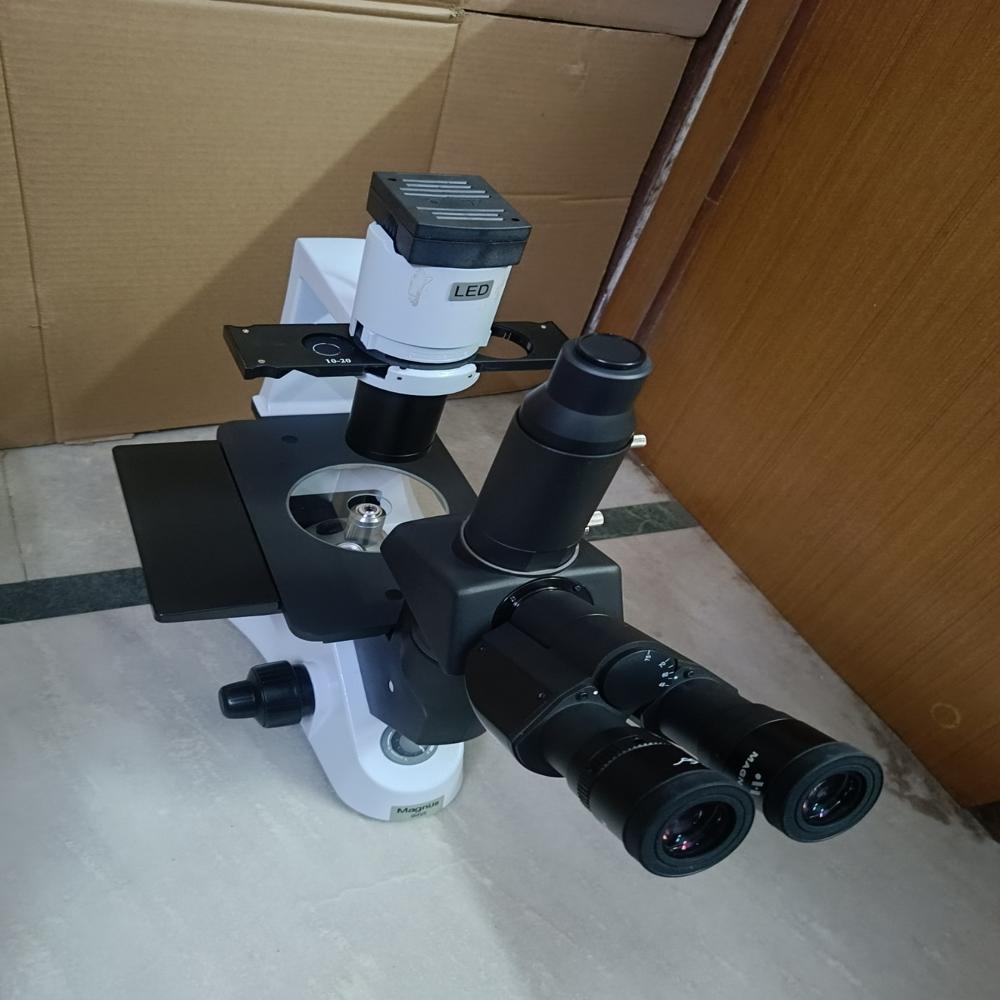
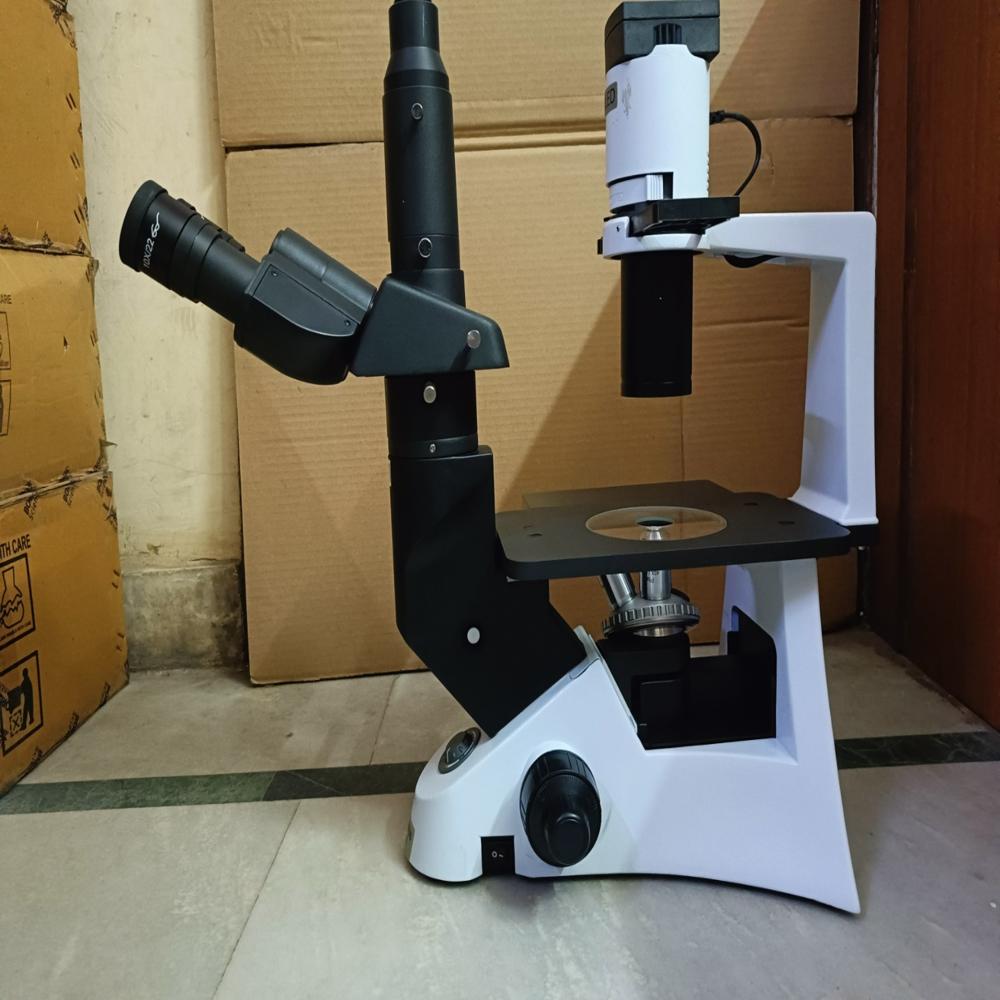
MAGNUS INVERTED TISSUE CULTURE TRINOCULAR MICROSCOPE MODEL INVI (HL)
Price 204330.0 INR/ Piece
MOQ : 1 Piece
MAGNUS INVERTED TISSUE CULTURE TRINOCULAR MICROSCOPE MODEL INVI (HL) Specification
- Features
- Long working distance objectives, anti-fungus coated optics, suitable for Petri dishes and culture flasks, phase contrast optional.
- Spare Parts
- Spare halogen lamp, fuse, and power cord included.
- View Head
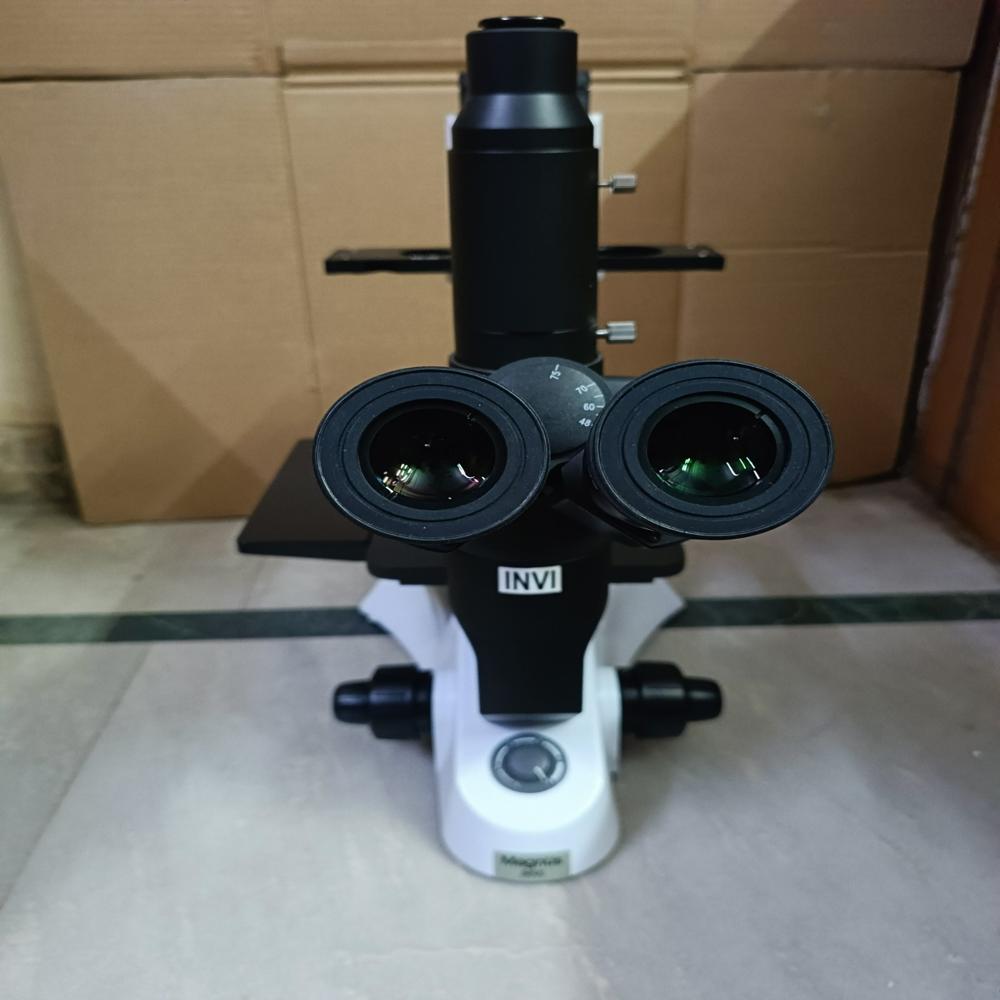
- Trinocular, Siedentopf type, 45 inclined, 360 rotatable.
- Focus System
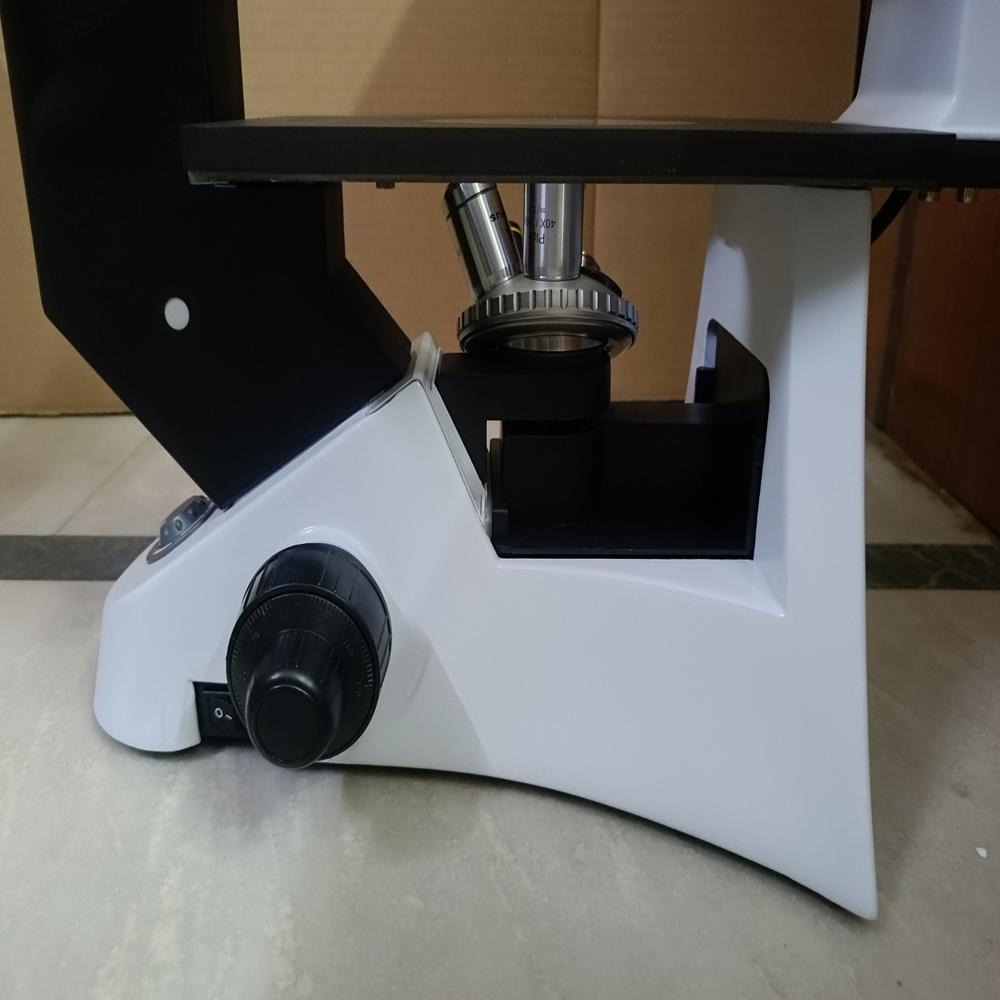
- Coaxial coarse and fine adjustment with tension control.
- Theory
- Inverted microscope for tissue culture observation and research, allowing observation of living cells in culture dishes or flasks.
- Drawtube
- Trinocular head, inclined at 45 with a vertical phototube.
- Sensor
- Supports camera attachment for digital imaging (sensor not included).
- Resolution
- Optical resolution dependent on objectives used (up to 1000x).
- Interface
- Trinocular port for camera or imaging device.
- Frame Rate
- Frame rate depends on the attached imaging system.
- Focal Distance
- 160mm optical system.
- Magnification
- 40x to 400x (based on objectives and eyepiece combination).
- Dimensions
- Approx. 490 mm (H) x 220 mm (W) x 510 mm (D).
- Focus Range
- Coarse and fine focus adjustment with tension control; total travel approx. 10mm.
- Eyepieces
- Wide Field 10x (paired eyepieces, 20mm field of view).
- Eyepiece Tube
- Trinocular; interpupillary adjustment 48mm-75mm.
- Illumination
- 6V 30W Halogen lamp, intensity adjustable.
- Coarse Adjustment Range
- Total travel approx. 10mm.
- Fine Adjustment Range
- 0.002mm precision.
- Working Stage
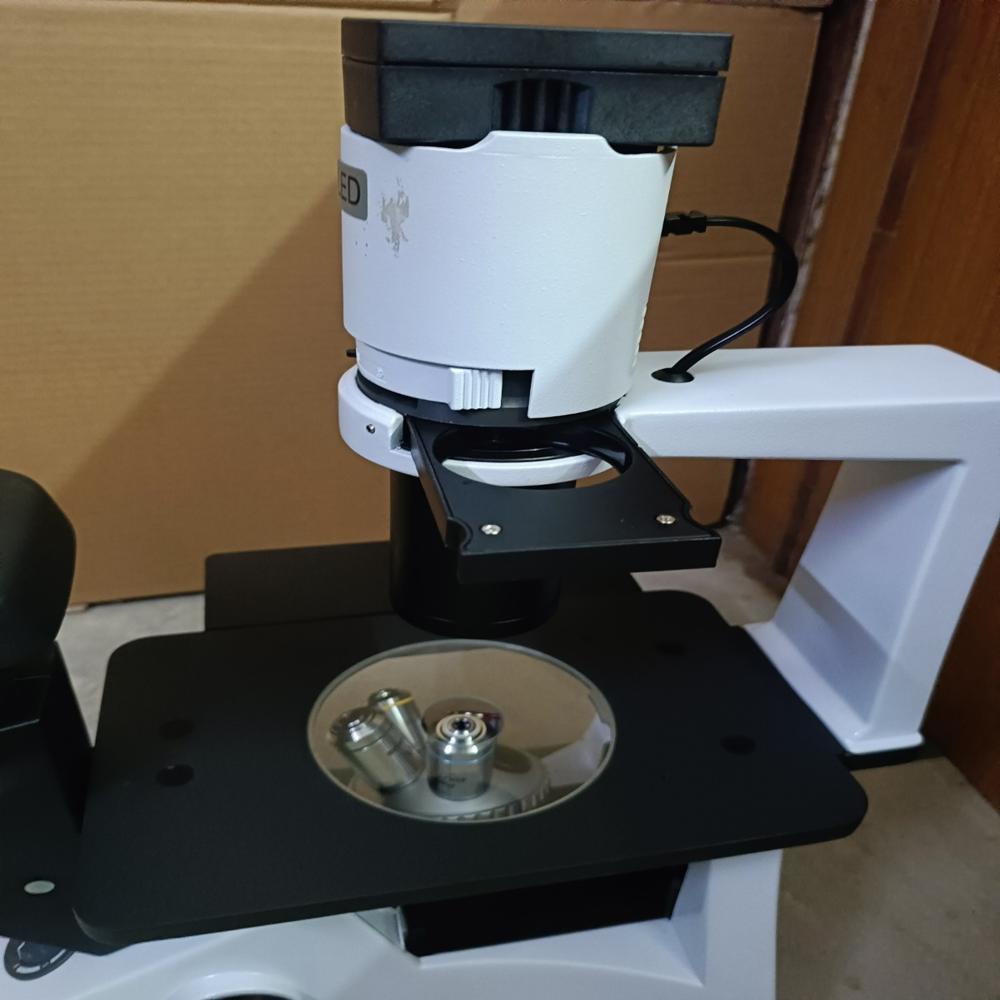
- Mechanical stage with slide holder and low-position coaxial X/Y controls, stage size 242 200 mm.
- Still Image Capture Resolution
- Resolution is camera dependent when using trinocular port.
- Video Capture Resolution
- Resolution is camera dependent when using trinocular port.
- Image Format
- Supports digital camera imaging (format dependent on attached camera).
- Interpupillary Distance
- Adjustable from 48mm to 75mm.
- Objective Achromatic
- Plan Achromatic objectives 4x/0.10, 10x/0.25, 20x/0.40, 40x/0.65 (long working distance).
- Condenser
- Condenser N.A. 0.30 for phase and bright field.
- Light Source
- 6V 30W Halogen lamp.
- Color
- White/Grey (powder-coated finish).
- Mechanical Stage Movement
- Movement range 120 x 78 mm.
- Nosepiece
- Quadruple backward revolving nosepiece with positive click stops.
- Stage Plate
- Interchangeable plate with glass insert for transmitted light.
- Petri Dish Accommodation
- Stage designed to accommodate culture flasks and Petri dishes up to 100 mm.
- Body Material
- Heavy-duty robust die-cast metal for vibration-free working.
- Phase Contrast Attachment
- Optional phase contrast slider available.
- Anti-Fungus Coating
- All optical elements coated for fungal resistance.
- Power Supply
- AC 100V-240V, 50/60Hz.
MAGNUS INVERTED TISSUE CULTURE TRINOCULAR MICROSCOPE MODEL INVI (HL) Trade Information
- Minimum Order Quantity
- 1 Piece
- Delivery Time
- 5 Week
About MAGNUS INVERTED TISSUE CULTURE TRINOCULAR MICROSCOPE MODEL INVI (HL)
MAGNUS INVERTED TISSUE CULTURE TRINOCULAR MICROSCOPE MODEL INVI (HL)
for brightfield and phase contrast applications (30 inclined, interpupillary 48mm75mm) having
6v30w halogen light illuminator, quintuple revolving nosepiece, coaxial coarse (stroke : 37.7mm per
rotation) & fine (stroke : 0.2mm per rotation) adjustment, plain stage (160x250mm) with glass insert,
auxiliary stage 70x180mm, Condenser LWD 72mm, Long working distance Plan Infinity Brightfield
Objectives 4x/0.1 (W.D 18mm) & 40x/0.6 (W.D 2.6mm - Cover Glass 1.2mm) And Phase Contrast
Objectives 10x/0.25 (W.D 10mm) & 20x/0.4 (W.D 5.1mm) with phase annulus plate (10x-20x, 40x) &
High eyepoint, extra wide field eyepiece EW10x (F.N.22) standard set complete.
Features :
Long Working Distance Plan Infinity Optics,Pre-Centered Phase Annulus, Trinocular Port In
Standard Unit, Excellent Field Flatness
9.2
Precision for Tissue Culture Research
Specially engineered for observing living cells, the inverted design and long working distance objectives of the INVI (HL) allow convenient examination of cultures in dishes or flasks. The anti-fungus optical coating and robust powder-coated finish ensure lasting performance even in demanding laboratory environments.
Flexible Imaging and Observation
With a trinocular head supporting camera attachments, users can easily capture digital stills and video. The microscope's Siedentopf-style head is 45 inclined and rotatable for comfortable viewing. Variable magnification from 40x to 400x and phase contrast compatibility broaden its application for cell biology, microbiology, and routine lab tasks.
User-Friendly Operations
Smooth mechanical stage controls, interchangeable glass plate for transmitted light, and wide interpupillary adjustment offer ease of use for multiple users. Coaxial coarse and fine focusing with tension control ensures stable, sharp results, while included spare parts extend operational reliability.
FAQ's of MAGNUS INVERTED TISSUE CULTURE TRINOCULAR MICROSCOPE MODEL INVI (HL):
Q: How does the inverted design benefit tissue culture observation?
A: The inverted microscope design allows you to observe cells at the bottom of Petri dishes and culture flasks, making it ideal for live cell research without disturbing the culture medium.Q: What are the available magnification options and how are they achieved?
A: Magnification is adjustable from 40x to 400x, depending on the combination of Plan Achromatic objectives (4x, 10x, 20x, 40x) and the paired 10x wide field eyepieces. Higher resolutions up to 1000x are possible with appropriate objectives.Q: When is phase contrast imaging available on this model?
A: Phase contrast imaging is available as an option by using the dedicated phase contrast slider and condenser attachments, enabling enhanced visualization of transparent cells and cultures.Q: Where can I attach a camera for digital imaging?
A: A digital or DSLR camera can be mounted onto the trinocular phototube, allowing real-time image and video capture. The supported formats and resolution depend on the attached camera model.Q: What steps are needed to adjust illumination for optimal viewing?
A: You can control brightness via the intensity knob for the built-in 6V 30W halogen lamp. Adjust the position of the condenser and glass insert as needed to optimize transmitted light for your sample.Q: How does the anti-fungus coating benefit long-term use?
A: All optical elements are treated with anti-fungus coating, protecting the microscope's lenses and internal components from fungal growth in humid environments, thus prolonging instrument life and optical performance.Q: How is mechanical stage movement controlled and what sample sizes can it accommodate?
A: The mechanical stage offers coaxial X/Y movement with a range of 120 x 78 mm, and the interchangeable plate can accommodate Petri dishes and culture flasks up to 100 mm in diameter, ensuring flexibility for various cell culture studies.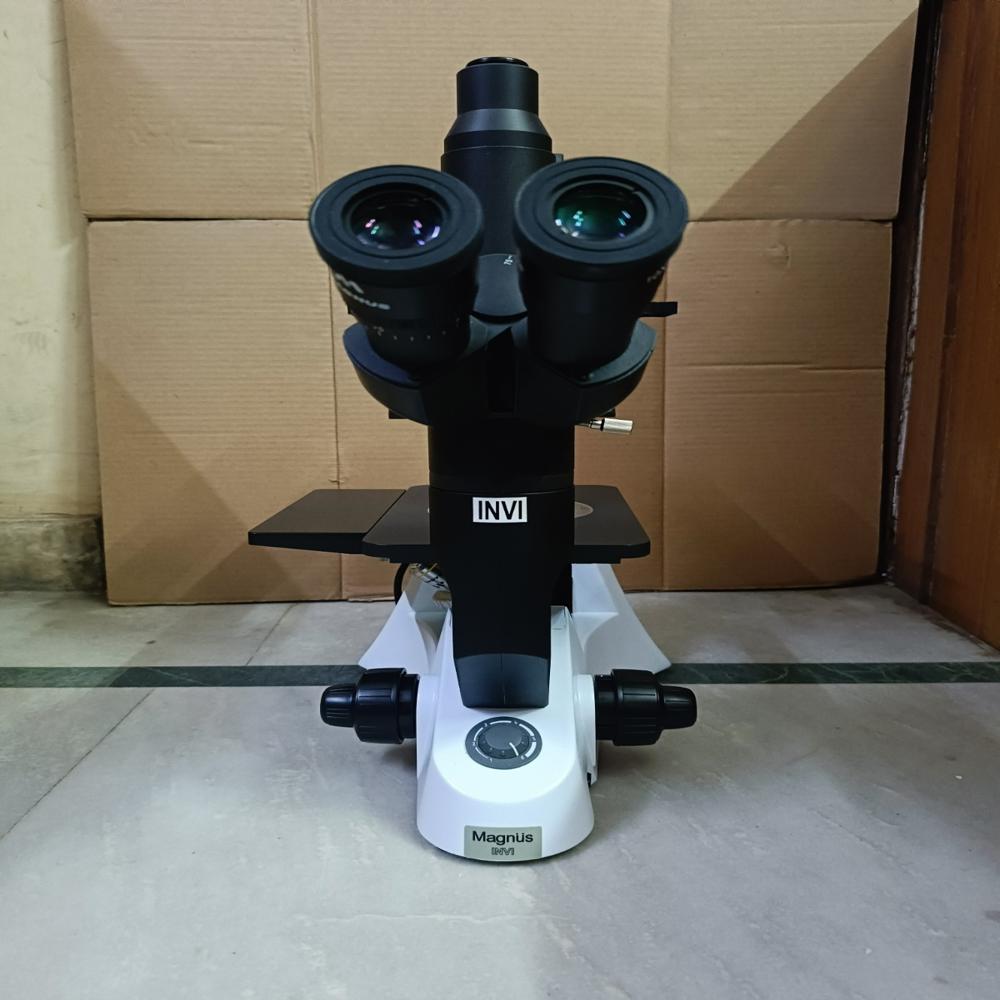
Tell us about your requirement

Price:
Quantity
Select Unit
- 50
- 100
- 200
- 250
- 500
- 1000+
Additional detail
Mobile number
Email

More Products in Inverted Microscope Category
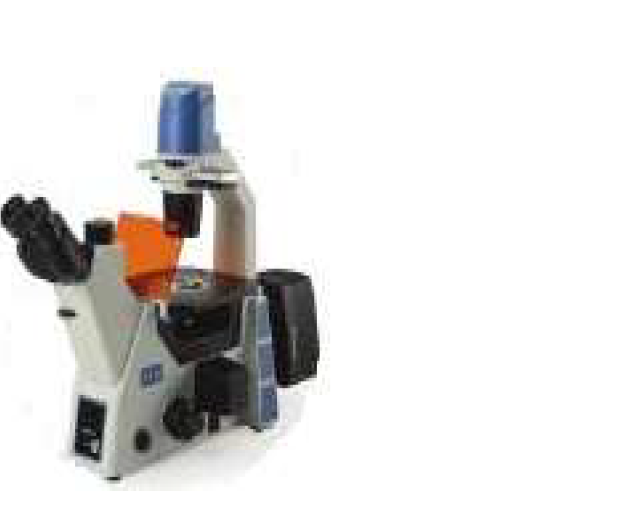
MAGNUS TRINOCULAR INVERTED FLUORESCENCE MICROSCOPE FOR BRIGHT FIELD , PHASE CONTRAST & FLUORESCENCE APPLICATION MODEL FL INVERSE
Price 1126990.0 INR / Piece
Minimum Order Quantity : 1 Piece
Features : Multimode application (bright field, phase contrast, fluorescence), modular illumination, ergonomic design, high stability
Sensor : Not applicable (optical system)
Resolution : High resolution, suitable for microbiology and cell culture observation
Fine Adjustment Range : 0.002mm precision
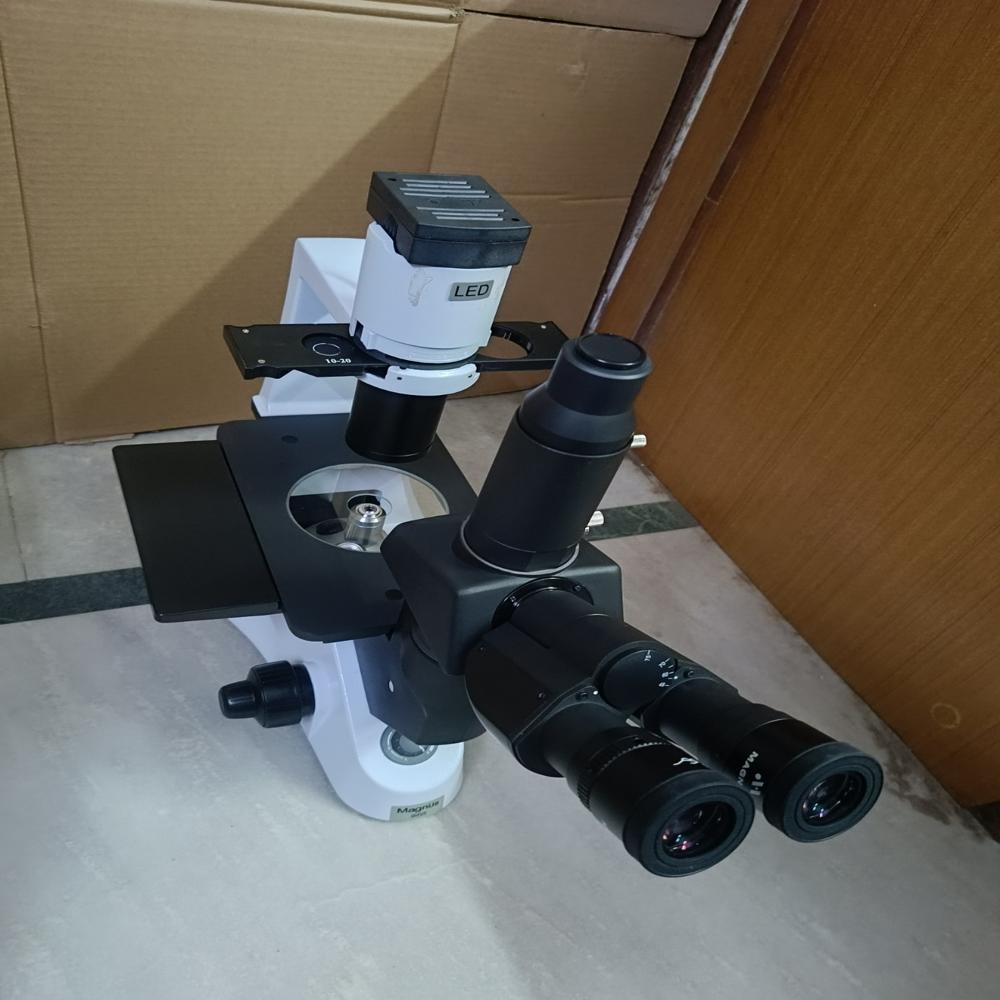
MAGNUS INVERTED TISSUE CULTURE TRINOCULAR MICROSCOPE MODEL INVI PLUS (HL)
Price 239000.0 INR / Piece
Minimum Order Quantity : 1 Piece
Features : Stable metal frame, ergonomic handle, antifungus treated optics, long working distance for culture flasks and Petri dishes.
Sensor : Digital imaging port compatible with various camera sensors (camera optional).
Resolution : Depends on attached camera (microscope optics up to 1000x resolving power).
Fine Adjustment Range : 0.002 mm graduation for precise focusing.
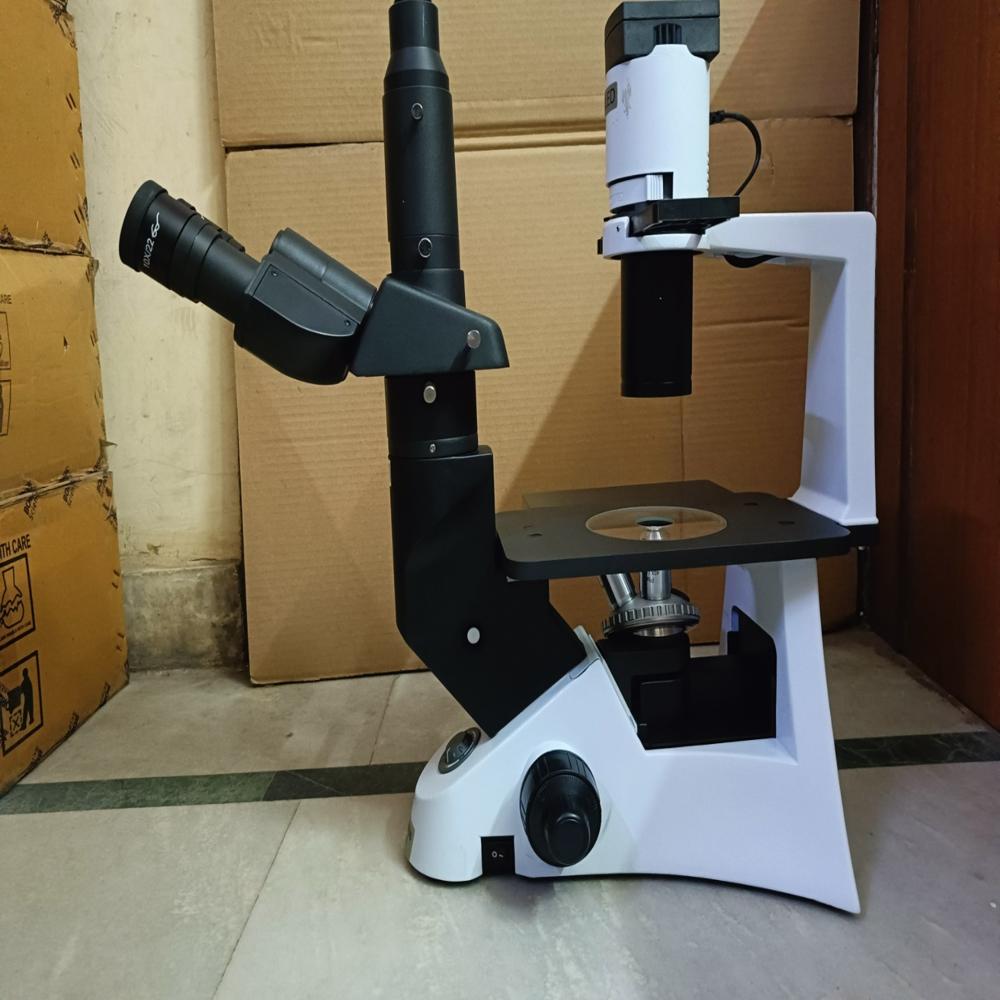
MAGNUS INVERTED TISSUE CULTURE TRINOCULAR MICROSCOPE MODEL INVI (HL) WITH ACCESSORIES:
Price 279705.0 INR / Piece
Minimum Order Quantity : 1 Piece
Features : Antifungal optics, ergonomic design, suitable for live cell and tissue culture work.
Sensor : Camera compatibility via photo port (sensor not included).
Resolution : Supports highresolution digital imaging attachments.
Fine Adjustment Range : 0.002 mm per graduation for precision focusing.
MAGNUS INVERTED TISSUE CULTURE TRINOCULAR MICROSCOPE MODEL INVI (LED)
Price 209970.0 INR / Set
Minimum Order Quantity : 1 Set
Features : LED illumination, modular stage design, ergonomic operation, suitable for Petri dishes/flasks, antifungal optics
Sensor : Not builtin, supports external digital camera attachments
Resolution : Depends on attached camera, optical resolution up to 100X objective lens capability
Fine Adjustment Range : 0.002mm precision


 Send Inquiry
Our Products
- Digital Colorimeter
- Visible Spectrophotometer
- Trinocular Microscope
- Biological Microscope
- Microscope Cmos Camera
- Physics Equipments
- Binocular Microscope
- Lab Equipments
- Monocular Microscope
- Research Microscopes
- Lab Reagents
- Inverted Microscope
- Turbidity Meter
- Stereoscopic Microscope
- Multi Head Teaching Microscope With LED
- Digital Melting Point Apparatus
- Stainless Steel Vertical Autoclave
- Laboratory Chemicals
- Auto Universal Titrator
- UV VIS Spectrophotometers
- Analytical And Scientific Instruments
- Digital Ph Meter
- Conductivity Meter
- Water And Soil Testing Kit
- Digital TDS Meter


Flat No. G-3, Plot No. 286, Sector-4, Vaishali,Ghaziabad - 201019, Uttar Pradesh, India

Mr. Pankaj Saran
(Proprietor )
Mobile :08071792071
 Send Inquiry
 Send SMS
 Call Me Free
Developed and Managed by Infocom Network Private Limited.
