
Call us now :08071792071
 Send Inquiry
 Send Inquiry
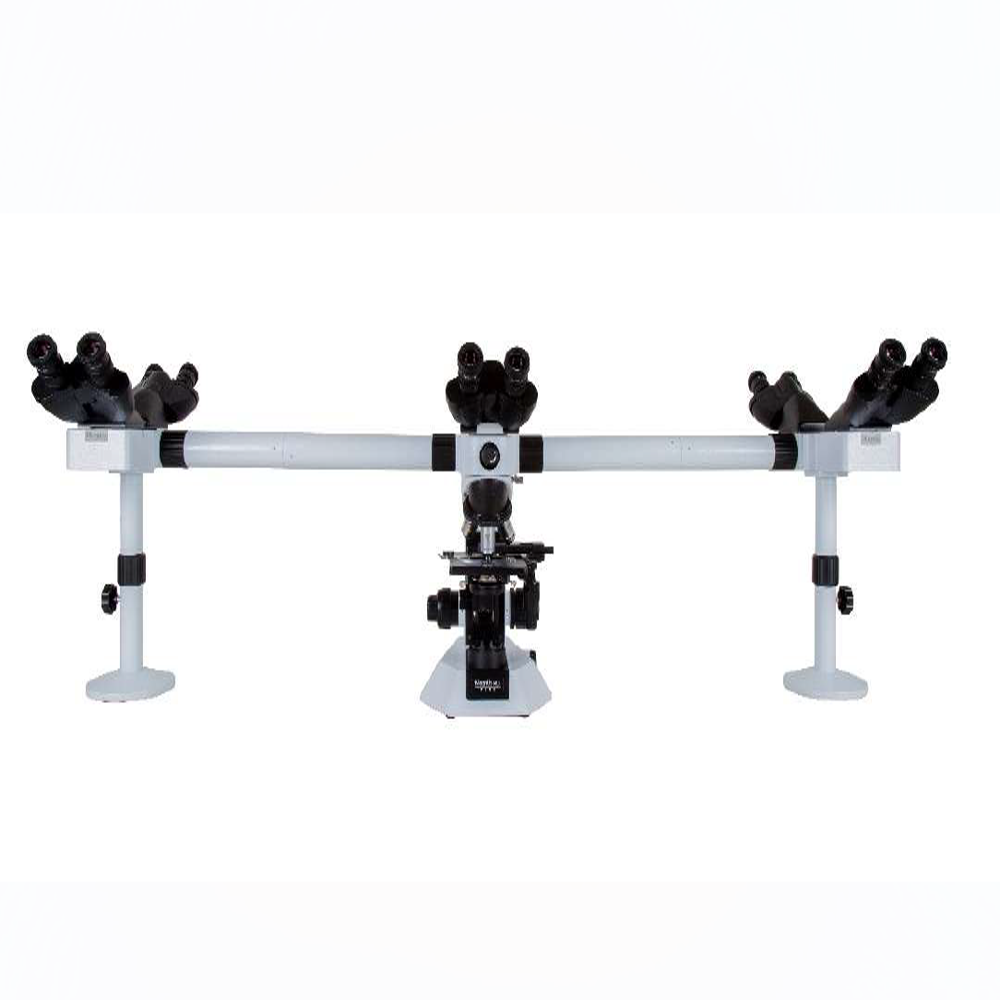
Magnus Penta Head Microscope Model PH5 LED
Price 757000.0 INR/ Piece
MOQ : 1 Piece
Magnus Penta Head Microscope Model PH5 LED Specification
- View Head
- Penta head with individual pointer system for each user.
- Focus System
- Coaxial coarse and fine focus mechanism with tension adjustment.
- Spare Parts
- Supplied with spare LED light, fuse, and fuse holder.
- Features
- Simultaneous observation for up to five users, individual eyepiece pointers for teaching, LED cold light with long lifespan, sturdy metal construction.
- Theory
- High precision multi-head microscopy for simultaneous observation by up to five users.
- Drawtube
- Binocular and trinocular head for penta head attachment with 30 inclination.
- Sensor
- Compatible with digital camera sensors via trinocular attachment.
- Resolution
- Dependent on camera adapter; optical resolution provided by plan achromatic objectives.
- Interface
- Trinocular port for camera connectivity; standard accessories included.
- Frame Rate
- Dependent on attached camera (not included); typically up to 30 fps for compatible models.
- Focal Distance
- 160 mm mechanical tube length.
- Magnification
- 40x to 1000x using standard objectives and supplied eyepieces.
- Dimensions
- Approx. 510 mm (L) x 440 mm (W) x 520 mm (H) with all heads attached.
- Focus Range
- Coarse and fine adjustment; 25 mm total range.
- Eyepieces
- WF10x/20mm with pointer included for five head users.
- Eyepiece Tube
- Paired tubes for each observer, inclined at 30.
- Illumination
- Built-in 3W LED illumination with adjustable intensity and separate LED pointer for demonstration.
- Coarse Adjustment Range
- 25mm with focus lock mechanism.
- Fine Adjustment Range
- 0.2mm precision movement.
- Working Stage
- Mechanical stage 140 x 140 mm with double slide holder; movement range 75 x 50 mm.
- Still Image Capture Resolution
- Camera dependent (not provided); supports full optical resolution of objectives.
- Video Capture Resolution
- Camera dependent; supports high-definition through trinocular port.
- Image Format
- Dependent on connected camera (not included); supports standard digital outputs via trinocular port.
- Interpupillary Distance
- 55-75 mm adjustable for all observers.
- Objective Achromatic
- 4x, 10x, 40x (spring), 100x (spring, oil) Plan Achromatic objectives included.
- Condenser
- Abbe condenser N.A. 1.25 with iris diaphragm and filter holder.
- Light Source
- Integrated 3W LED with continuous brightness control.
- Body Finish
- Epoxy coated metal for durability and chemical resistance.
- Power Supply
- AC 100-240V, 50/60 Hz universal power input.
- Optical System
- Infinity corrected optical system for enhanced image clarity and flatness of field.
- Dust Cover
- Provided for storage and protection when not in use.
- Stage Rotation
- 360 rotatable stage for ease of use during group demonstrations.
- Weight
- Net weight approximately 15 kg with all attachments.
- Pointer Illumination
- Integrated LED pointer illumination for each viewer, controlled from master head.
- Anti-Fungal Optics
- All optical elements are anti-fungal treated for extended life in humid conditions.
Magnus Penta Head Microscope Model PH5 LED Trade Information
- Minimum Order Quantity
- 1 Piece
- Delivery Time
- 5 Week
About Magnus Penta Head Microscope Model PH5 LED
Magnus Penta Head Microscope Model PH5 LED with Trinocular observation tube for Main
Observer, paired widefield eyepiece 10x/22, 3 color LED Pointer attachment with support stands &
connecting fittings, 4 Nos. of Binocular heads (F.No. 22) & paired eyepieces 10x/22 mm for 4 coobservers
to get same orientation of image as that of main observer
Simultaneous Group Observation
With its innovative penta head, the Magnus PH5 LED allows up to five individuals to observe specimens at the same time, each having their own eyepiece with an integrated pointer. This promotes interactive teaching and collaborative research, making it an outstanding tool for group demonstrations and discussions in classrooms or laboratories.
Advanced Optical Performance
The microscope features an infinity corrected optical system paired with plan achromatic objectives (4x, 10x, 40x (spring), 100x oil (spring)), ensuring crisp, clear, and flat-field images. All optics are anti-fungal treated, making them perfect for use in humid environments and extending the life and reliability of the instrument.
User-Friendly and Durable Design
Designed for frequent, intensive use, the PH5 LED offers a sturdy, chemically-resistant frame with a protective dust cover. The mechanical stage rotates 360, and ergonomic tube inclinations ensure comfort. Easy focus adjustments, intuitive illumination controls, and convenient camera connectivity via a trinocular port make this microscope adaptable to different needs.
FAQ's of Magnus Penta Head Microscope Model PH5 LED:
Q: How does the penta head design benefit group observations?
A: The penta head allows up to five users to simultaneously view the same specimen, each through individual eyepieces equipped with integrated LED pointers for guided discussion. This feature fosters interactive teaching and collaborative study, essential for classroom or group research settings.Q: What are the advantages of anti-fungal treated optics?
A: Anti-fungal treatment prolongs the microscope's life by protecting optical elements from fungal growth, particularly in humid conditions. This ensures sustained image clarity, reduces maintenance, and enhances the instrument's reliability in varied environments.Q: When should I use the trinocular port, and what devices can I connect?
A: The trinocular port is used when you want to connect a digital camera for capturing images or video. You can attach compatible digital cameras or imaging sensors (not included) for documentation, digital archiving, or live display, making it suitable for presentations or remote teaching.Q: Where can I adjust the illumination and pointer controls?
A: Both the main LED illumination and each observer's pointer LED are easily adjusted. The intensity control for general illumination is located on the microscope's body, while master pointer commands allow the instructor to direct the pointer LEDs individually during demonstrations.Q: How do I maintain and store the PH5 LED microscope?
A: Routine maintenance involves keeping the optics clean and dry, using the supplied dust cover when not in use, and checking that all adjustments move smoothly. The epoxy-coated metal body resists chemicals, and spare parts like LEDs and fuses are provided for quick replacement as needed.Q: What is the process for achieving optimal image clarity?
A: Begin by placing your slide on the 360 rotatable stage and securing it. Select the desired objective lens (40x-1000x magnification), use coarse focus to find your subject, then refine with fine adjustment for sharp detail. Adjust the Abbe condenser and iris diaphragm for contrast, and set light intensity accordingly.Q: What types of educational or research settings is this microscope best suited for?
A: The Magnus PH5 LED is ideal for group learning, laboratory instruction, and collaborative analysis in schools, colleges, medical, and research institutions. Its simultaneous multi-head design makes it especially useful for guided demonstrations and peer-to-peer teaching scenarios.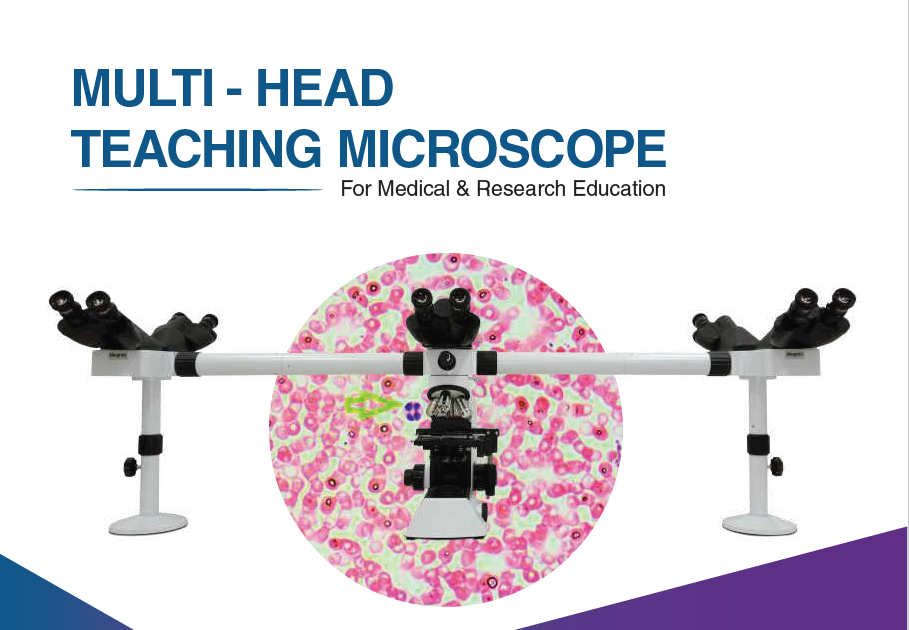
Tell us about your requirement

Price:
Quantity
Select Unit
- 50
- 100
- 200
- 250
- 500
- 1000+
Additional detail
Mobile number
Email

More Products in Multi Head Teaching Microscope With LED Category
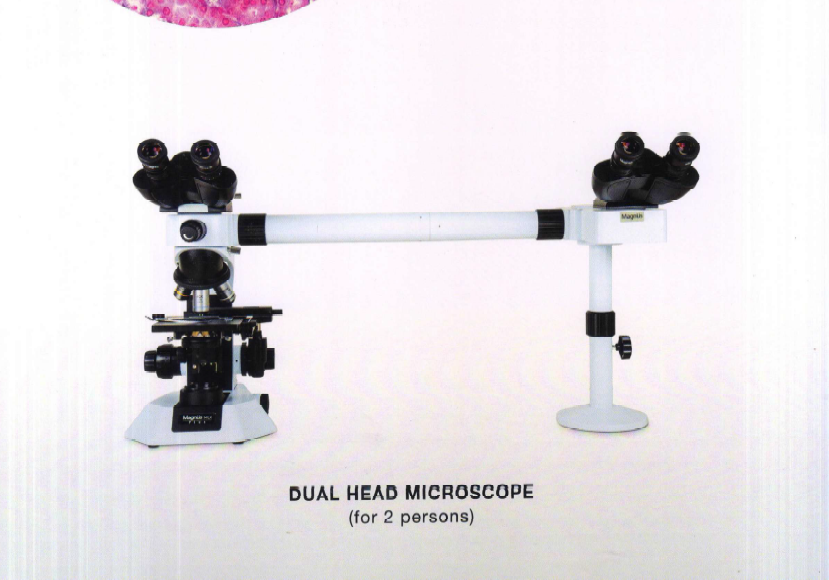
Dual Head Microscope
Price 338760.0 INR / Piece
Minimum Order Quantity : 1 Piece
Features : Dual head design for teaching; precise focusing; robust build; LED or halogen illumination.
Illumination : Builtin LED/halogen lamp with adjustable intensity.
Light Source : Builtin halogen/LED illumination with variable intensity.
Eyepiece Tube : Dual, inclined at 45, rotatable 360 for convenient usage.
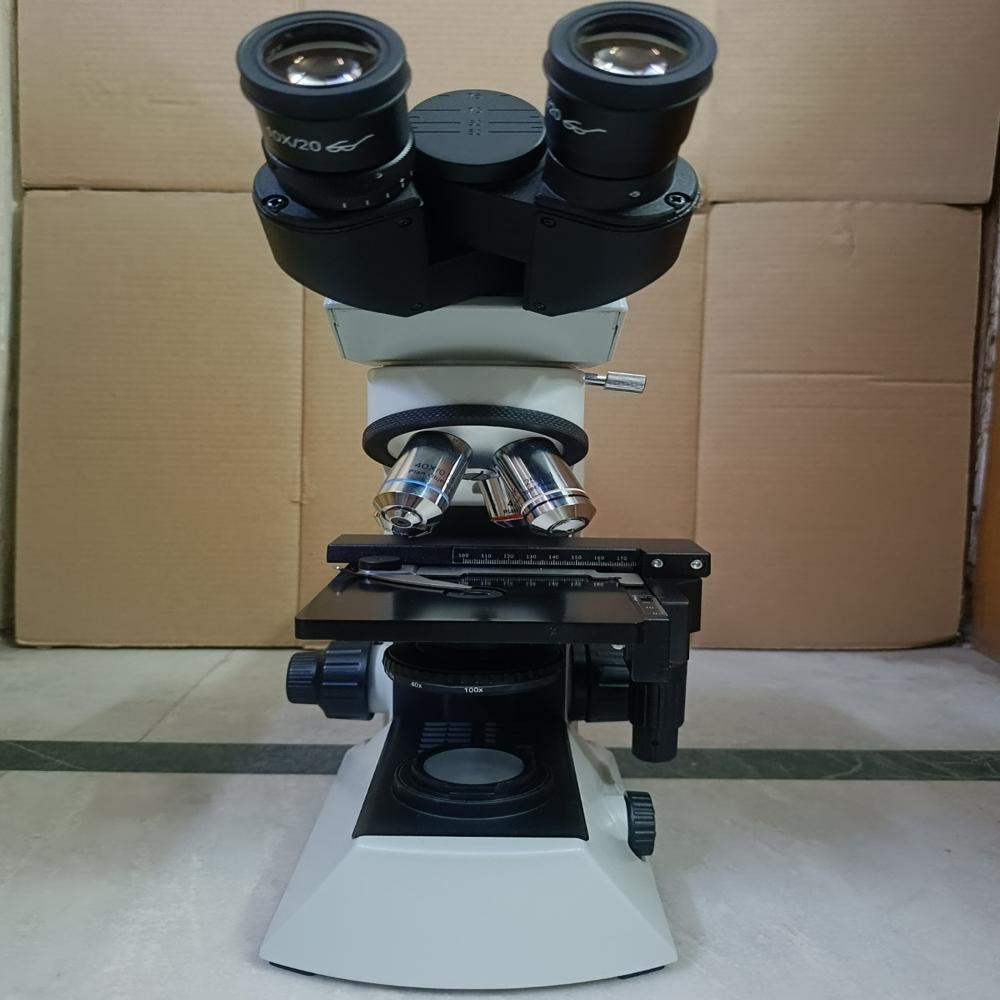
Magnus Penta Head Microscope MX21i TR LED
Price 716275.0 INR / Piece
Minimum Order Quantity : 1 Piece
Features : Penta viewing system, LED illumination, ergonomic design, trinocular compatibility
Illumination : LED illumination, builtin with variable light control
Light Source : High power LED with intensity control
Eyepiece Tube : Penta Head, inclined at 30 for comfortable viewing
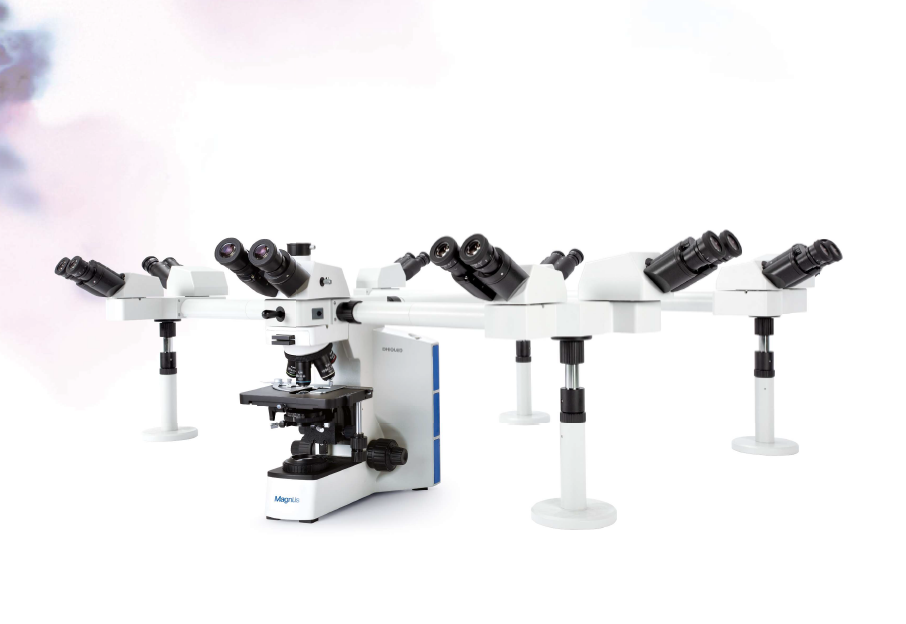
Magnus Decahead Microscope for Teaching Purpose Model DH10LED
Price 1857135.0 INR / Piece
Minimum Order Quantity : 1 Piece
Features : Ideal for demonstration and teaching, simultaneous observation for a large group, robust and durable metal body.
Illumination : Builtin LED illumination with adjustable intensity.
Light Source : Highbrightness, energyefficient LED with variable illumination.
Eyepiece Tube : Inclined at 30, rotatable for comfortable viewing.
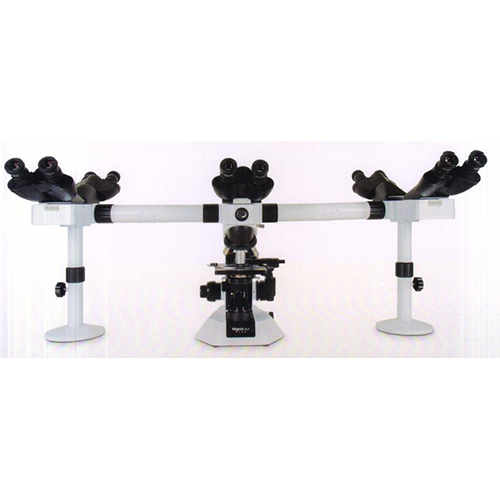
MLXi Plus Penta Head Microscope
Price 705260.0 INR / Piece
Minimum Order Quantity : 1 Piece
Features : High quality


 Send Inquiry
Our Products
- Digital Colorimeter
- Visible Spectrophotometer
- Trinocular Microscope
- Biological Microscope
- Microscope Cmos Camera
- Physics Equipments
- Binocular Microscope
- Lab Equipments
- Monocular Microscope
- Research Microscopes
- Lab Reagents
- Inverted Microscope
- Turbidity Meter
- Stereoscopic Microscope
- Multi Head Teaching Microscope With LED
- Digital Melting Point Apparatus
- Stainless Steel Vertical Autoclave
- Laboratory Chemicals
- Auto Universal Titrator
- UV VIS Spectrophotometers
- Analytical And Scientific Instruments
- Digital Ph Meter
- Conductivity Meter
- Water And Soil Testing Kit
- Digital TDS Meter


Flat No. G-3, Plot No. 286, Sector-4, Vaishali,Ghaziabad - 201019, Uttar Pradesh, India

Mr. Pankaj Saran
(Proprietor )
Mobile :08071792071
 Send Inquiry
 Send SMS
 Call Me Free
Developed and Managed by Infocom Network Private Limited.
