
Call us now :08045477954
 Send Inquiry

 Send Inquiry
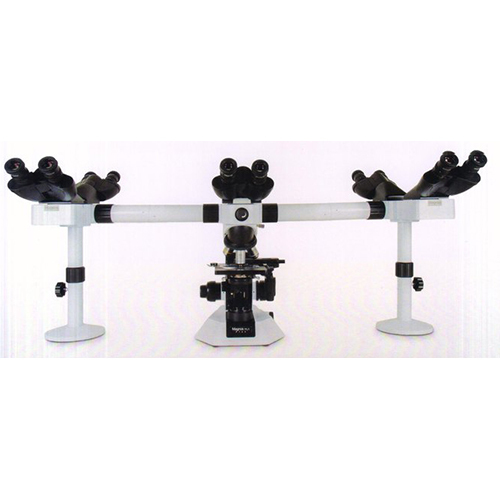
Dual Head Microscope
Price 338760.0 INR/ Piece
MOQ : 1 Piece
Dual Head Microscope Specification
- Focus System
- Co-axial coarse and fine focusing system with tension adjustment.
- View Head
- Dual head for simultaneous observation; 360 rotatable.
- Features
- Dual head design for teaching; precise focusing; robust build; LED or halogen illumination.
- Spare Parts
- Supplied with spare bulb, fuse and dust cover.
- Theory
- Based on advanced optical technology for simultaneous observation by two users.
- Drawtube
- Dual head, inclined at 45 and rotatable 360.
- Sensor
- Not applicable (standard optical microscope).
- Resolution
- Dependent on eyepiece and objective combination.
- Interface
- No digital interface; optical observation only.
- Frame Rate
- Not applicable (not a digital microscope).
- Focal Distance
- Standard working distance at 37.5mm (with 10X objective).
- Magnification
- 40X to 1000X (with supplied objectives and eyepieces).
- Dimensions
- Approx. 370mm (H) x 260mm (W) x 180mm (D).
- Focus Range
- Coarse and fine focus provided with total travel up to 20mm.
- Eyepieces
- Wide field WF10X and WF15X paired eyepieces.
- Eyepiece Tube
- Dual, inclined at 45, rotatable 360 for convenient usage.
- Illumination
- Built-in LED/halogen lamp with adjustable intensity.
- Coarse Adjustment Range
- Total 20mm movement.
- Fine Adjustment Range
- Precise adjustments, minimum gradation 2 m.
- Working Stage
- Mechanical stage, size 125 x 115mm, with slide holder and graduated locator.
- Still Image Capture Resolution
- Not applicable (not a digital microscope).
- Video Capture Resolution
- Not applicable (not a digital microscope).
- Image Format
- Not applicable for standard optical microscope.
- Interpupillary Distance
- 55-75mm adjustable.
- Objective Achromatic
- Achromatic 4X, 10X, 40X (SL), 100X (SL) Oil immersion lenses.
- Condenser
- Abbe condenser N.A. 1.25, with iris diaphragm and filter holder.
- Light Source
- Built-in halogen/LED illumination with variable intensity.
- Body Material
- Die-cast metal body with corrosion resistant finish.
- Packing
- Supplied in sturdy, shock-resistant box.
- Optical System
- Parfocal, antireflection coated optics.
- Stage Scale Graduation
- Graduated in millimeters for precise slide movement.
- Optional Accessories
- Polarizer set, dark field condenser, plan objectives.
- Power Supply
- AC 220V/50Hz or 110V/60Hz, universal input.
- Diopter Adjustment
- Available on left eyepiece for individual correction.
- Stage Movement
- X-Y mechanical movement up to 70mm (X) and 30mm (Y).
- Nosepiece
- Quadruple revolving nosepiece with positive click stops.
Dual Head Microscope Trade Information
- Minimum Order Quantity
- 1 Piece
- Delivery Time
- 6 Week
About Dual Head Microscope
The movable Green light pointer enables the main observer to highlight important specimen area to co-observer. To optimise visibility of the pointer with different stains, the pointer intensity can be adjusted.Orientation:
The image orientation is identical for all the co-obsever. Irriatation caused by mirror image or rotated image are totally rules out
Specifications:
| Body | Aluminum Die cast body with critical movement based on ball bearing & wire guide thereby ensuring smooth & Precise movement |
| Viewing Head for Main Observer | Siedentopf design Trinocular Head Inclined at 30 Deg , Interpupillary Distance 48-75m with Diopter Setting 1 No. |
| Viewing Head for Co-observers | Siedentopf design binicular Head Inclined at 30, Interpupillary Distance 48-75mm with Diopter setting 4 Nos. |
| Siedentopf design bincolular Head Inclined at 30 Deg, Interpupillary Distance 48-75mm with diopter setting 1 No. | |
| Penta Head Attachment | Stand for support - Two nos. |
| LED pointer attachment - One no. | |
| Connecting fitting - Two nos. | |
| The co observers gets the same orientation of image as that of main observation. | |
| Dual Head Attachment | Stand for support - One no. |
| LED pointer attachment - One no. | |
| Connecting fitting - One no. | |
| The co observers gets the same orientation of image as that of main observation. |
Robust Dual Head Design
Engineered for educational and research settings, the microscope's dual head enables two users to observe the same specimen at once, making it ideal for teaching and collaborative tasks. The inclined, 360 rotatable viewing head allows comfortable usage for extended periods, ensuring ergonomic operation for users of different heights and preferences.
Precision and Versatility in Observation
With a mechanical stage fitted with X-Y micrometer movement and millimeter scale graduation, the microscope offers precise slide maneuvers. The quadruple nosepiece, equipped with achromatic objectives from 4X to 100X (oil immersion), supports a broad magnification range, delivering sharp and detailed images across all settings.
Superior Optics and Illumination
Featuring parfocal, anti-reflection coated optics and a choice of bright LED or halogen illumination with adjustable intensity, the microscope guarantees clear, consistent viewing. The Abbe condenser, iris diaphragm, and filter holder further optimize light control for enhanced contrast and specimen detail.
FAQ's of Dual Head Microscope:
Q: How does the dual head feature benefit teaching and collaborative work?
A: The dual head design allows two individuals to view specimens simultaneously, facilitating direct instruction, discussion, and joint analysis. This is particularly valuable for educators demonstrating techniques to students or professionals engaged in collaborative research.Q: What is the process to achieve precise focusing with this microscope?
A: The microscope provides co-axial coarse and fine focusing knobs with tension adjustment. The fine focus offers graduated adjustments as precise as 2 m, while the coarse focus covers a total travel of 20mm, enabling rapid and accurate slide focusing for clear observations.Q: When should I use the oil immersion objective lens?
A: The 100X oil immersion objective is used when examining specimens that require high magnification and maximum resolution. To use, apply immersion oil between the slide and the objective lens to minimize light refraction and enhance image clarity.Q: Where is the microscope typically used?
A: This Dual Head Microscope is ideal for schools, colleges, universities, research laboratories, and medical facilities - anywhere simultaneous specimen observation or instruction is required.Q: What are the optional accessories available, and how do they enhance usage?
A: Optional accessories include a polarizer set for viewing birefringent materials, a dark field condenser for observing unstained samples, and plan objectives for superior flatness of field. These add-ons expand the microscope's application range.Q: How is the stage movement managed for precise slide positioning?
A: The mechanical stage allows X-Y movement up to 70mm (X-axis) and 30mm (Y-axis), with a scale graduated in millimeters. This enables meticulous sample navigation and repeatable positioning during observation.Q: What ensures the durability and longevity of this microscope?
A: A die-cast metal body with corrosion resistant finish ensures structural integrity, while the microscope is supplied in a shock-resistant box with spare bulb, fuse, and a dust cover, providing maximum protection and extended usability.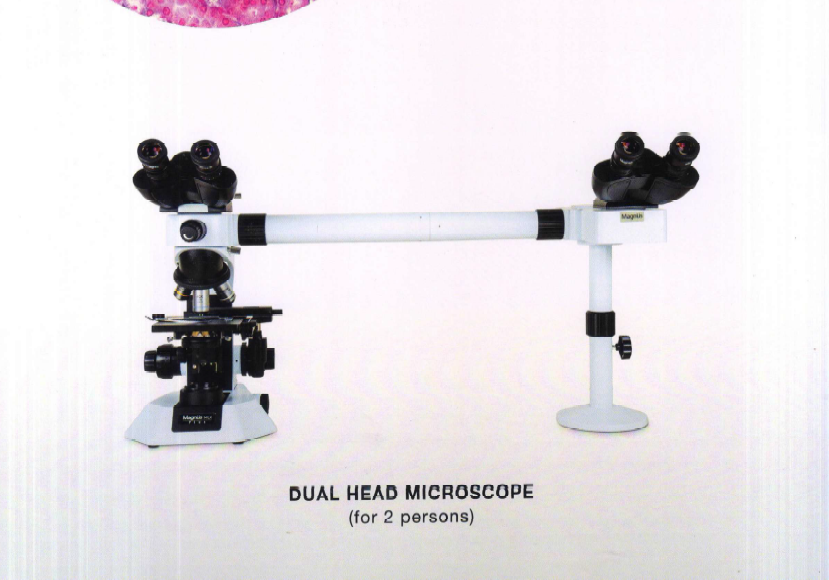
Tell us about your requirement

Price:
Quantity
Select Unit
- 50
- 100
- 200
- 250
- 500
- 1000+
Additional detail
Mobile number
Email

More Products in Multi Head Teaching Microscope With LED Category
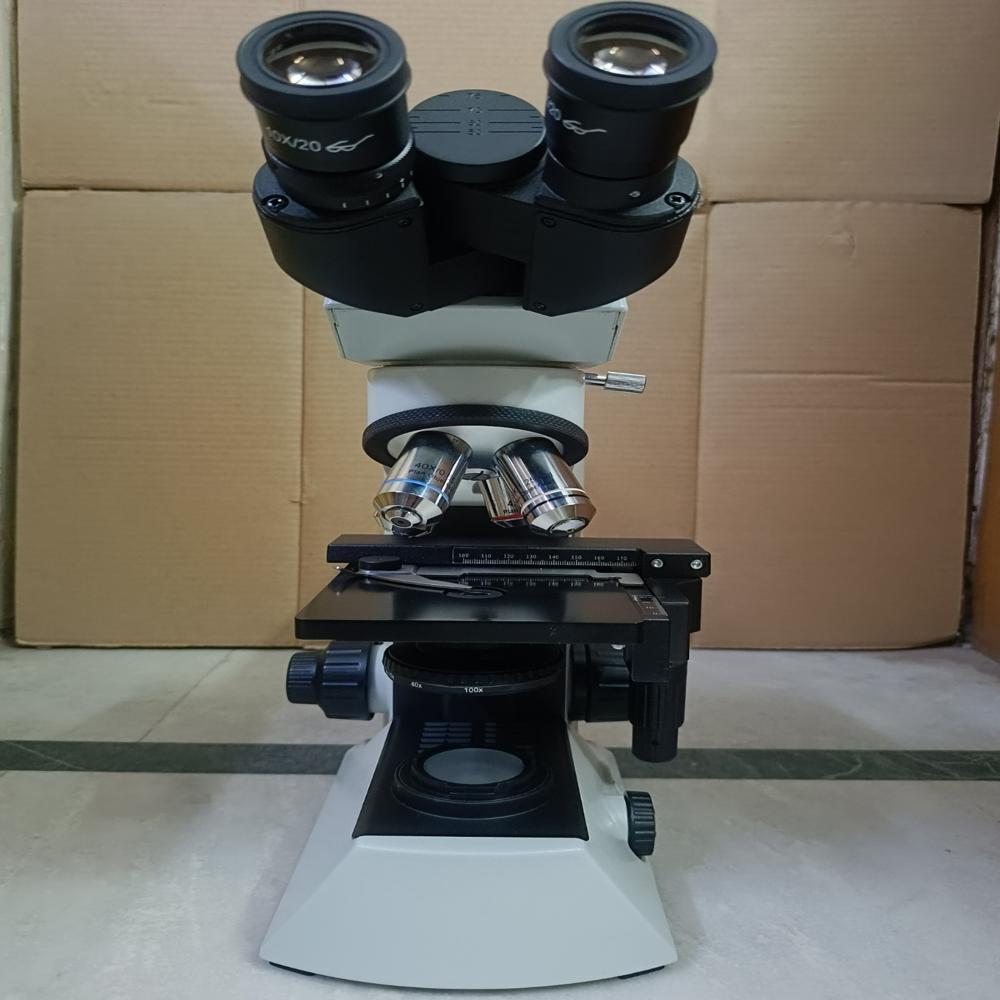
Magnus Penta Head Microscope MX21i TR LED
Price 716275.0 INR / Piece
Minimum Order Quantity : 1 Piece
Features : Penta viewing system, LED illumination, ergonomic design, trinocular compatibility
Sensor : Not applicable (optical microscope)
Dimensions : Approx. 400 mm (H) x 350 mm (W) x 250 mm (D)
Drawtube : Other, Trinocular, 360 rotatable
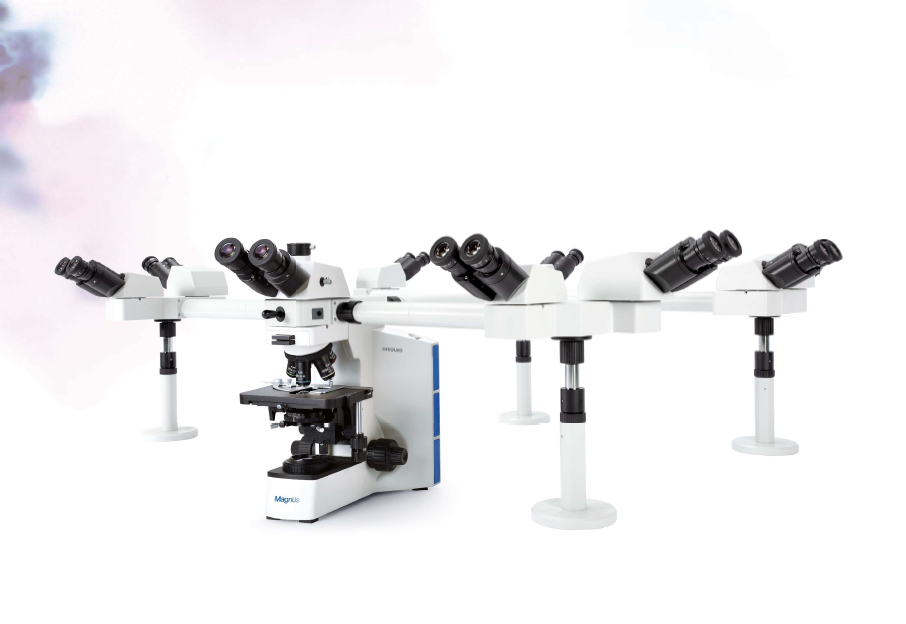
Magnus Decahead Microscope for Teaching Purpose Model DH10LED
Price 1857135.0 INR / Piece
Minimum Order Quantity : 1 Piece
Features : Ideal for demonstration and teaching, simultaneous observation for a large group, robust and durable metal body.
Sensor : Not Applicable (no digital camera included as standard).
Dimensions : Standard size; main head approx. 37cm (H) x 25cm (W) x 21cm (L) (approximate).
Drawtube : Other, Decahead (10 Viewing Heads) with inclined tubes and diopter adjustment.
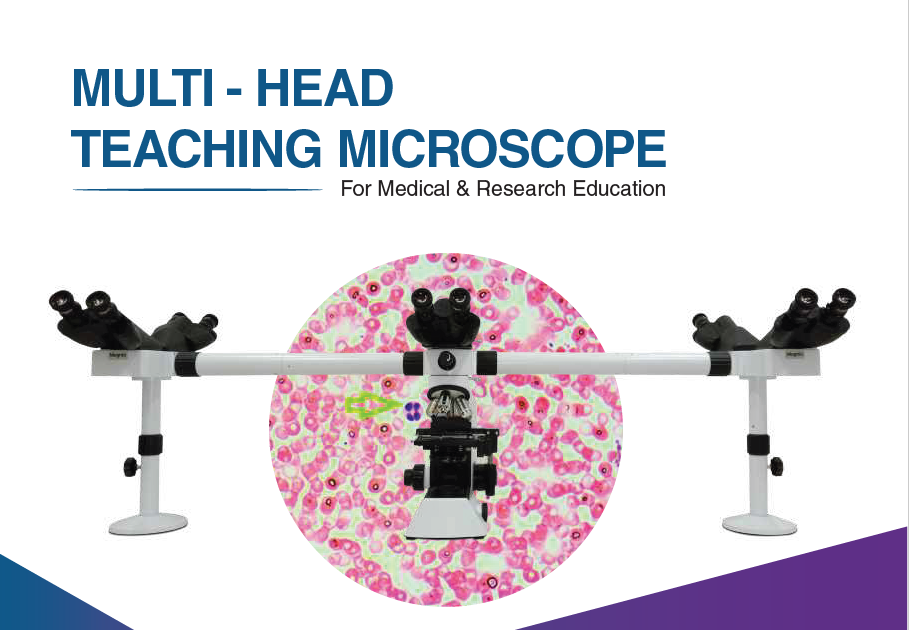
Magnus Penta Head Microscope Model PH5 LED
Price 757000.0 INR / Piece
Minimum Order Quantity : 1 Piece
Features : Simultaneous observation for up to five users, individual eyepiece pointers for teaching, LED cold light with long lifespan, sturdy metal construction.
Sensor : Compatible with digital camera sensors via trinocular attachment.
Dimensions : Approx. 510 mm (L) x 440 mm (W) x 520 mm (H) with all heads attached.
Drawtube : Other, Binocular and trinocular head for penta head attachment with 30 inclination.
MLXi Plus Penta Head Microscope
Price 705260.0 INR / Piece
Minimum Order Quantity : 1 Piece
Features : High quality


 Send Inquiry
Our Products
- Digital Colorimeter
- Visible Spectrophotometer
- Trinocular Microscope
- Biological Microscope
- Microscope Cmos Camera
- Physics Equipments
- Binocular Microscope
- Lab Equipments
- Monocular Microscope
- Research Microscopes
- Lab Reagents
- Inverted Microscope
- Turbidity Meter
- Stereoscopic Microscope
- Multi Head Teaching Microscope With LED
- Digital Melting Point Apparatus
- Stainless Steel Vertical Autoclave
- Laboratory Chemicals
- Auto Universal Titrator
- UV VIS Spectrophotometers
- Analytical And Scientific Instruments
- Digital Ph Meter
- Conductivity Meter
- Water And Soil Testing Kit
- Digital TDS Meter


Flat No. G-3, Plot No. 286, Sector-4, Vaishali,Ghaziabad - 201019, Uttar Pradesh, India

Mr. Pankaj Saran
(Proprietor)
Mobile :08045477954
 Send Inquiry
 Send SMS
 Call Me Free

Developed and Managed by Infocom Network Private Limited.
